






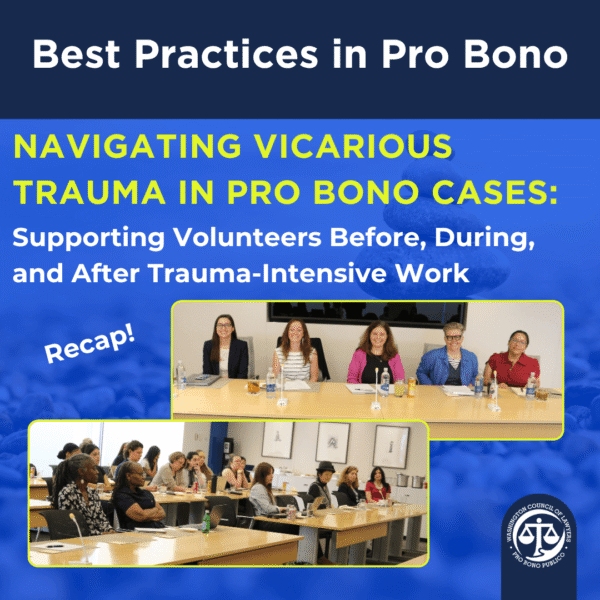
Best Practices in Pro Bono: Navigating Vicarious Trauma in Pro Bono Cases: Supporting Volunteers Before, During, and After Trauma‑Intensive Work Recap
Our recent discussion focused on recognizing and responding to vicarious trauma and burnout in public interest law. Through a conversation with professionals representing legal services organizations, pro bono programs, and attorney wellness initiatives, participants learned how trauma-intensive legal work can affect attorneys, their clients, and the broader legal workplace. The discussion also highlighted practical strategies for maintaining well-being while continuing to provide meaningful advocacy.
Our panelists included:
- Moderator: Jen Masi, Pro Bono Director, Children’s Law Center
- Rena E. Cutlip-Mason, Pro Bono Immigration Attorney, AkinB
- Tracy Davis, Managing Attorney, Bread for the City
- Niki L. Irish, LICSW, Outreach and Education Coordinator, Lawyer Assistance Program, District of Columbia Bar
- Ingrid Rosales Zavala, Deputy Director, Psychosocial Training & Technical Assistance, KIND
The discussion began by distinguishing between vicarious trauma and burnout, two terms that are often used interchangeably but are quite distinct. The panelists explained that vicarious trauma develops through repeated exposure to the traumatic experiences of others and can fundamentally change how attorneys view their work, relationships, and the world around them.
Burnout, on the other hand, is characterized by emotional exhaustion, depersonalization, and a reduced sense of accomplishment, and can affect professionals regardless of whether their work involves trauma. While the two experiences are distinct, the panelists emphasized that prolonged exposure to trauma and frustration with difficult systems can contribute to burnout over time.
The panelists then reflected on the challenges they are currently experiencing within their organizations. Several speakers acknowledged that changing legal landscapes have made the work increasingly demanding, and the outcomes less favorable than before. The panelists discussed how this can directly affect a legal team’s perspective and be quite a jarring process to some. While outcomes may not always be favorable, the discussion emphasized that attorneys continue to make a meaningful difference simply by advocating for clients and ensuring they are not navigating difficult circumstances alone.
The panel also highlighted the importance of recognizing small victories and the resilience of clients and attorneys. It can be challenging but remembering that even when a case is unsuccessful, an attorney’s advocacy can still have a lasting impact on a client’s experience. Attorneys focus on the legal issue but beyond it there is a life with big and small milestones alike where clients and attorneys show their resilience through celebrating, relaxing, and enjoying life. Even as the system presents increasing barriers we as people in community together can make
Another major theme of the discussion was creating healthy workplace cultures that acknowledge the emotional realities of trauma-intensive work. The speakers encouraged organizations to normalize conversations about mental health, recognize that individuals respond to stress differently, and create environments where attorneys feel comfortable asking for support. Establishing healthy boundaries, understanding one’s own capacity, and maintaining open communication with supervisors and colleagues were identified as important ways to reduce the long-term effects of vicarious trauma and burnout.
The panel also shared practical tools and resources available to attorneys. Participants were encouraged to utilize assistance programs, such as the DC Bar Lawyer’s Assistance Program (LAP), counseling services, and peer support as ways of proactive action, rather than reaching a breaking point and reacting to built up trauma or burn out. DC LAP provides 12 free sessions to every member of the DC Bar, these sessions are confidential. DC LAP can also connect you with someone that has been through a similar situation to you through their peer support program. Communication with the peer support person is considered attorney-client privilege and is also confidential. Learn more using the links below.
The speakers also discussed the importance of intentionally “completing the stress cycle” through practices such as physical movement, meaningful social connection, creative expression, laughter, mindfulness, and other activities that help the body recover after periods of prolonged stress. These strategies not only benefit attorneys but also help ensure they can continue providing thoughtful and effective representation for their clients.
To conclude the discussion, the panelists reminded participants that resilience is built through connection. Whether through supportive colleagues, mentors, wellness resources, or simply taking time to celebrate small successes, prioritizing personal well-being ultimately strengthens the ability to serve clients. By recognizing the effects of trauma, setting healthy boundaries, and supporting one another, attorneys can build more sustainable careers while continuing to advocate effectively for those they represent.
Thank you to our panelists for sharing their experiences, insights, and practical guidance. We appreciate everyone who joined us for this important discussion and look forward to continuing conversations that support the well-being of the public interest legal community.
Resources:
- DC Lawyer’s Assistance Program
- Alston & Bird Managing Compassion Fatigue and Vicarious Trauma in Pro Bono Legal Work – 57:52 minute training video
- Alston & Bird Benevolent Detachment Training 5.27.26 – 28 slide presentation accompanying above training video
- Burnout: The secret to solving the stress cycle by Emily & Amelia Nagosaki – this 6:58 video explains completing the stress cycle and introduces the full book by the Nagosaki sisters.