Skip to content

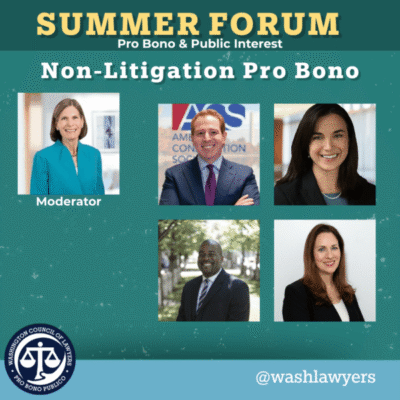
Summer Forum 2026: Non-Litigation Pro Bono Panel Preview

When we say pro bono, many think of assisting litigants through navigating the many ins and out of the court system, but that’s not the only place our legal system asks non-lawyers to have an understanding of the law. There are many opportunities for pro bono representation in transactional matters. From setting up businesses to providing tax advice, knowing the right forms and how to fill them out can make all the difference. Trained lawyers can draft wills for veterans, navigate uncontested divorce proceedings, research novel issues, and much more. If you want to support your community but hope to stay out of the courtroom, this is the panel for you! Learn more about the wide-ranging legal issues transactional attorneys can get involved with at our 2026 Summer Forum Panel on Non-Litigation Pro Bono Law on Thursday, July 9. Register here! 

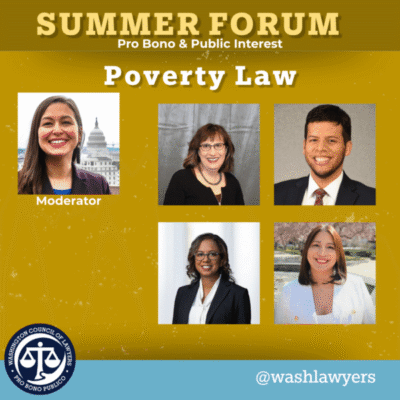
Summer Forum 2026: Poverty Law Panel Preview

The legal hurdles faced by individuals living in poverty are vast. They often face uphill battles with issues impacting the most fundamental human needs: family stability, safe housing, food security, fair employment, and freedom from fear and violence. Representation is vital in these areas, and the need is overwhelming. These areas of law often have the highest rate of pro se litigants; when pro bono or public-interest lawyers get involved, these cases also produce some of the most life-changing outcomes for the parties involved. Pro bono lawyers who take on these cases literally can be life-savers. Learn more about the wide-ranging legal issues individuals living in poverty face and what pro bono opportunities are available in D.C. and across the country to help address these needs at our 2026 Summer Forum Panel on Poverty Law on Thursday, July 9. Register here!

Summer Forum 2026: Immigration and Human Rights Panel Preview

The legal landscape in America has been tumultuous for immigrants, their friends, families, and communities. This year, we have seen communities torn apart by militant and, at times, illegal action - people pulled from their homes, their jobs, their schools, or even the courthouse itself. It has been a battle for immigration attorneys to stay on top of both the changes in the law and the ever mounting need for their support as more and more people face or fear being removed from their lives. Navigating a foreign legal system is always hard, but it has become treacherous in ever developing ways. This panel will give you insight into what the field of immigration law looks like today and opportunities in which you can provide assistance. Learn more about the wide-ranging legal issues immigrants face and what pro bono opportunities are available in D.C. and across the country to help address these needs at our 2026 Summer Forum Panel on Immigration and Human Rights Panel. Register here to check out this panel at the Summer Forum!

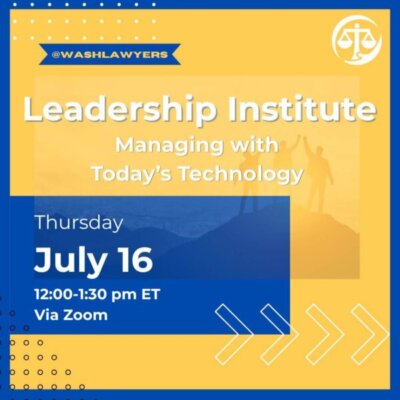
Graphic: yellow background with white text stating the name of the session and the day and time

Leadership Institute: Managing with Today’s Technology

In a rapidly evolving digital landscape, effective leadership requires more than traditional management skills—it demands adaptability, technological fluency, and a deep commitment to equity and inclusion. Managing with Today's Technology brings together leaders from across the legal and public service communities to explore how leadership is transforming in an increasingly virtual and tech-driven environment. Our discussion will be led by Jim Sandman, Distinguished Lecturer and Senior Consultant to the Future of the Profession Initiative at the University of Pennsylvania Carey Law School and former President of Legal Services Corporation, and Michael Lukens,  Executive Director of the Amica Center for Immigrant Rights. This program will equip participants with practical strategies and insights on leading effectively in modern legal and service-oriented workplaces. Topics include: Managing and engaging virtual teams, Leveraging technology in legal practice, Navigating generational dynamics, Cultivating executive presence, and Strengthening communication across diverse teams. Designed for mid-level supervisors—including attorneys and non-attorneys working in legal services organizations, government agencies, corporate legal departments, law firm pro bono programs, and community-based organizations—this session offers a valuable opportunity to connect leadership principles with real-world challenges. Participants will leave better prepared to lead with purpose, foster inclusive environments, and drive meaningful impact in their organizations and communities. For Washington Council of Lawyers members, this leadership session costs just $35. For non-members, the cost is $45. (Join Washington Council of Lawyers to take advantage of the discounted member rates.) If you registered for both sessions, there is no need to re-register for this session. Scholarships are available thanks to the generosity of the D.C. Bar Foundation. To apply for a scholarship, please complete this online scholarship form. The list of DC Bar Foundation Grantees is here. If you are working for any of these organizations when registering for Washington Council of Lawyers’ Leadership Institute, please submit your registration through the scholarship request form on the registration page.

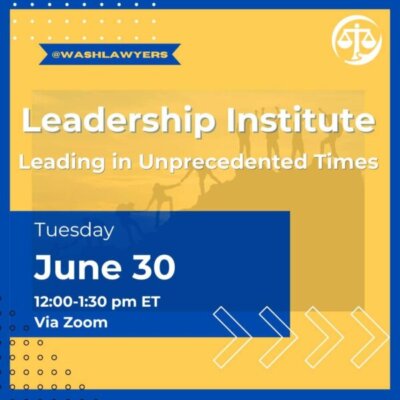
Graphic: Yellow background with white text that includes name and date of session

Leadership Institute: Leading in Unprecedented Times

In a time of rapid change and growing complexity, leadership within the legal community demands adaptability, clarity of purpose, and a deep commitment to justice. Leading in Unprecedented Times is an interactive discussion session lead by Laura Brown, Executive Director, First Shift Justice Project, and Amy Nelson, Senior Legal Director, Whitman-Walker. This program is designed for mid-level supervisors—both lawyers and non-lawyers—who lead teams, direct volunteers, or are preparing to step into a supervisory role. Participants will engage in a candid, practical exploration of leadership in challenging and uncertain environments. Key topics will include: Shaping and sustaining a healthy, mission-driven workplace culture Motivating, inspiring, and developing staff and volunteers Empowering teams while safeguarding organizational values and goals Maintaining consistency and sound decision-making amid rapidly changing circumstances Through facilitated discussion and shared experiences, attendees will gain actionable strategies to lead with confidence, support their teams effectively, and advance their organizations’ missions—even amid ongoing uncertainty. If you participate in both sessions, you have the additional opportunity for one-on-one guidance and support through a mentor match. The cost to attend both sessions for nonmembers is $95. For Washington Council of Lawyers members, the cost is just $75. (Join Washington Council of Lawyers to take advantage of the discounted member rates.) Your registration includes the mentoring component. Single-session registration is also available without the mentoring component. For Washington Council of Lawyers members, single sessions cost just $35. For non-members, the cost is $45. Scholarships are available thanks to the generosity of the D.C. Bar Foundation. To apply for a scholarship, please complete this online scholarship form. The list of DC Bar Foundation Grantees is here. If you are working for any of these organizations when registering for Washington Council of Lawyers’ Leadership Institute, please submit your registration through the scholarship request form on the registration page. We welcome attendees from legal services organizations, government agencies, corporate legal departments, law firm pro bono programs, and community-based organizations.

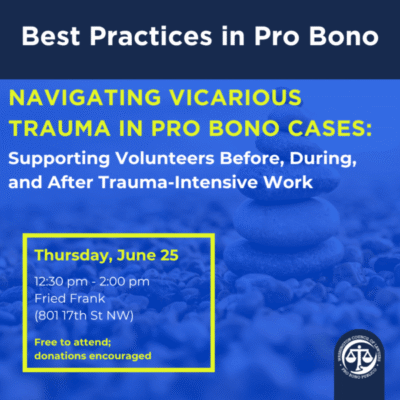
Best Practices in Pro Bono: Navigating Vicarious Trauma in Pro Bono Cases: Supporting Volunteers Before, During, and After Trauma‑Intensive Work

Pro bono volunteers often step into moments of profound human crisis—supporting asylum seekers fleeing violence, advocating for survivors of abuse, and assisting families facing destabilizing life events. These matters frequently involve trauma, and volunteers are often navigating unfamiliar legal terrain at the same time. When attorneys are not experts in the practice area or the trauma their clients have endured, it can be difficult to recognize triggers, respond appropriately, or understand how to set boundaries that protect both client well‑being and volunteer sustainability. At the same time, volunteers bring their own lived experiences to this work. For some, the trauma embedded in pro bono cases may resonate deeply or unexpectedly, creating emotional strain that is not necessarily acknowledged openly. Many volunteers also struggle to identify or address vicarious trauma—especially when they are balancing demanding day jobs, personal stressors, and the broader pressures of the world around them. Organizations and firms face parallel challenges: When and how should they check in with volunteers? What structures, practices, or tools can meaningfully support pro bono attorneys who are straddling two professional environments? How can we build systems that normalize conversations about vicarious trauma and equip volunteers and coordinators with strategies to manage it? This panel will explore these questions from both the legal services and law firm perspectives. We will discuss practical approaches for preparing volunteers to engage in trauma-informed advocacy, supporting them while they are engaged in it, and ensuring they have resources and community after trauma-intensive work. We will also examine opportunities for developing or strengthening organizational practices that help volunteers recognize, navigate, and mitigate vicarious trauma. Join us for a candid conversation about how to support the emotional and professional well‑being of pro bono volunteers and walk away with actionable tools to put into practice for long-term volunteer sustainability. Our panel will be moderated by Jen Masi, Pro Bono Director, Children’s Law Center, in conversation with: Rena E. Cutlip-Mason, Pro Bono Immigration Attorney, Akin Tracy Davis, Managing Attorney, Bread for the City Niki L. Irish, LICSW, Outreach and Education Coordinator, Lawyer Assistance Program, District of Columbia Bar Ingrid Rosales Zavala, Deputy Director, Psychosocial Training & Technical Assistance, KIND We welcome pro bono coordinators from law firms, corporations, legal services providers, nonprofits, government agencies, and anyone who staffs pro bono projects.


Back To Top