

Skip to content

Creating Opportunity for Legal Professionals with Past Convictions

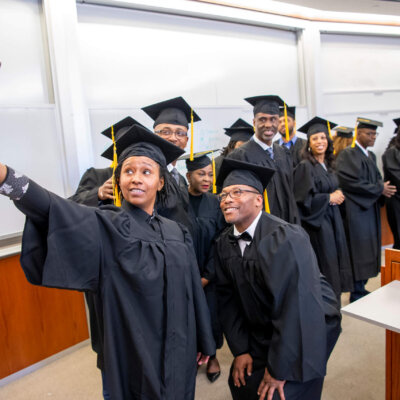
Approximately 600,000 people return to their communities following incarceration each year, and it is estimated that more than 1 in 4 returning citizens is unemployed. This is indicative of the collateral consequences of incarceration and the many challenges of reentry – but also shows that there is a massive pool of skilled individuals that employers are missing out on. This is especially true in the legal field. Returning citizens have direct experience in the system, and many have also become practiced legal researchers while incarcerated – skills that would be an asset to any law firm. Five years ago, Georgetown University and the DC Mayor’s Office on Returning Citizen Affairs (MORCA) came together to create a paralegal program with the goal of helping connect returning citizens to sustainable careers while also meeting a need in the industry for qualified and highly skilled paralegals.

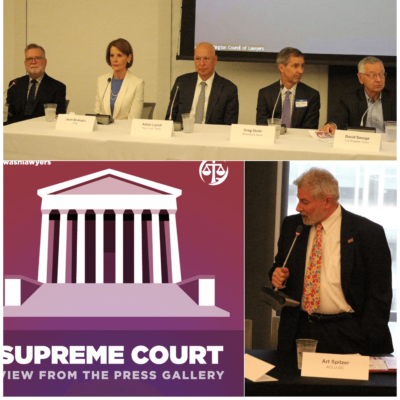
Government Pro Bono Roundtable 2023 Recap

Lawyers who work for any government have a couple of extra considerations to make before doing pro bono work. But as our Government Pro Bono Roundtable moderator and panelists showed, doing pro bono as a government attorney is still accessible and rewarding. Read on to learn (or get a refresher on) some tips from the pros:

In-House Pro Bono Program and Fair: Making Pro Bono Work in a Virtual World Recap

We had a great time working with the Association of Corporate Counsel’s National Capital Region to host the In-House Pro Bono Program and Fair: Making Pro Bono Work in a Virtual World. Over the course of an hour, our panelists told us about how their respective organizations adapted their pro bono offerings in response to the pandemic and shared advice for audience members looking to get involved in pro bono work.

Litigation Skills Series: Hearsay

Confidence in the courtroom comes from a dynamic understanding of the Federal Rules of Evidence. But not all rules are created equal. Hearsay is one of those challenging areas that even seasoned litigators need to review from time to time. Under Federal Rule 801, hearsay is an out-of-court statement offered for the “truth of the matter asserted.” What exactly does that mean? Join us for Litigation Skills Series: Hearsay to learn more about when and how the hearsay rules apply, the exceptions to the rules, and how to overcome hearsay objections. This training will be run by experienced faculty, Barbara Butterworth, Counsel, Litigation Mentor Program at Finnegan, Henderson, Farabow, Garrett & Dunner, LLP. The first hour will be a lecture and a short demonstration. During the last half hour, attendees will be able to apply what they've learned and get direct feedback on their impeachment of a witness. Materials will be shared ahead of time so that you can prepare. This training is appropriate for public-interest, law firm, in-house, and government lawyers, as well as law students who have taken evidence and have trial-practice or mock-trial experience. Scholarships are available thanks to the generosity of the D.C. Bar Foundation. To apply for a scholarship, please complete this online scholarship form.

Litigation Skills Series: Exhibits & Evidentiary Foundations

Trials can be fraught with evidentiary minefields. But perhaps none more so than getting a document into evidence over the accompanying objections and roadblocks. Understanding the process is key to planning how to navigate the expected (and unexpected) hurdles. Ensure your trial materials are successfully entered into evidence with Litigation Skills Series: Exhibits & Evidentiary Foundations. Through lecture and demonstration, litigation experts will teach the basics of admitting evidence—including business records, charts, photos, ledgers, drawings, letters, emails, social media posts, and other documents. The course will begin with a lively presentation and top-notch demonstration and end with the opportunity to "get on your feet" and practice what you have learned. This training is appropriate for public-interest, law firm, in-house, and government lawyers, as well as law students who have taken evidence and have trial-practice or mock-trial experience. The Exhibits & Evidentiary Foundations faculty include: Kate Oler, Special Master on the United States Court of Federal Claims Greg Lipper, LeGrand Law PLLC CLE credit is approved for 1.5 CA general, 1.5 NJ general, and 1.5 NY skills (newly admitted and experienced), and is pending but not guaranteed for VA. Reciprocal credit may be available in other jurisdictions. Scholarships are available thanks to the generosity of the D.C. Bar Foundation. To apply for a scholarship, please complete this online scholarship form.

Litigation Skills Series: Ethics

Ethics rules are helpful in navigating difficult issues but what about the grey areas not covered by the rules? Facing a pro se litigant or difficult opposing counsel, advocating effectively for your client before a challenging fact finder, or representing a tough client are among the many challenges faced by public-interest lawyers and pro bono volunteers. These situations can be equally daunting to navigate, and understanding your options are vital to effective representation. The Ethics training panel features: Gwen Washington, Pro Bono Attorney at Cleary Gottlieb, Megan Challender, Legal Manager at NVRDC, and June Lee, Director of the Immigrant Rights Legal Services Project at Legal Aid Society of the District of Columbia. Don't worry, we have a safe space for you to learn how to avoid potential quagmires for public-interest and pro bono lawyers when facing these issues and more. Note, this training is not an Ethics CLE and will not be eligible for CLE credit.  

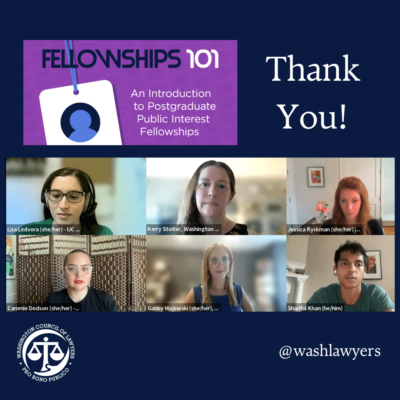
Graphic: Screenshot of panelists for Pro Bono Goes Local

Pro Bono Goes Local Recap

DC Pro Bono Week official;y kicked off with Pro Bono Goes Local! Our panelists began with a lightning round covering where the need for pro bono attorneys exists within our community by highlighting the nuances of our community, statistics that drive their work, and where they see the gaps in justice for District neighbors.

Photo: Chris Marin headshot

Welcome Our New Program Director, Chris Marin!

Join us in welcoming Chris Marin as our new Program Director. Chris is a recent graduate of the American University, Washington College of Law, where they cultivated a passion for access to justice and finding innovative connections between legal professionals to advance the work of pro bono and the public-interest community.

Back To Top