DC Pro Bono Week 2019 Photos!
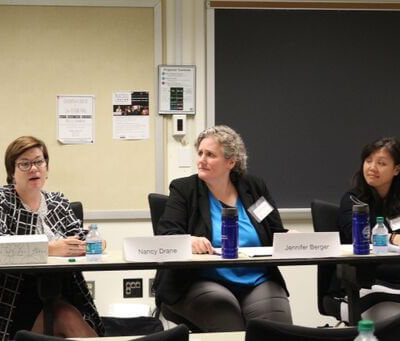
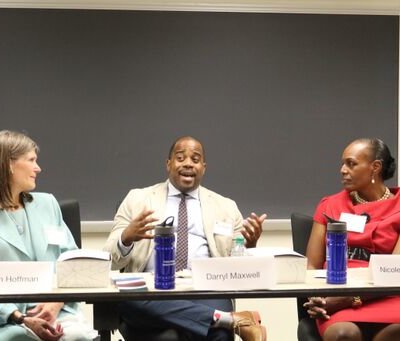
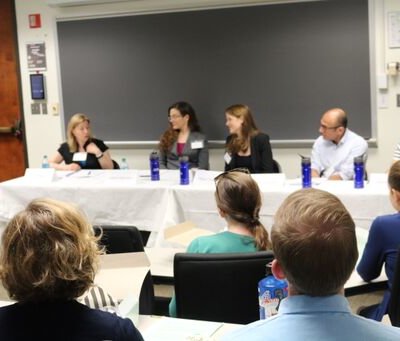
Pro Bono Week 2019 is a wrap! See all the fun, learning and volunteering.
During DC Pro Bono Week 2019 we profiled lawyers who made a profound difference in the lives of their pro bono clients despite heavy demands on their time. We hope they have inspired you to take on your own pro bono case.
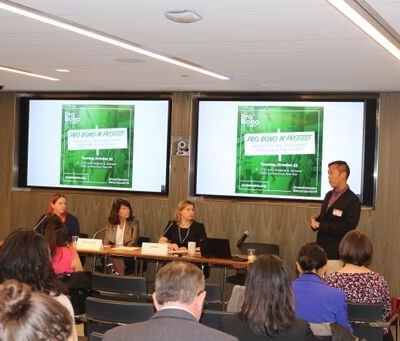
D.C. hosts over 2,000 protests a year. This unique landscape gives local lawyers an amazing chance to protect democracy and uphold the First Amendment. To highlight and promote pro bono opportunities in this exciting area, the Washington Council of Lawyers hosted Pro Bono in Protest: Protecting First Amendment Freedoms in the District on October 22, 2019 at Steptoe & Johnson, with co-sponsorship from the American Constitution Society, the Filipino American Lawyers Association of Washington, DC, and the Metropolitan Washington Employment Lawyers Association.
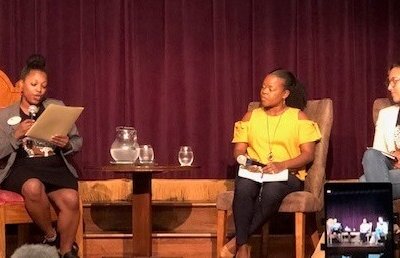
Every year, pregnancy-related complications kill about 700 women. That’s bad enough, but the racial disparity makes it even worse: Compared to white women, black women are three times more likely to die because of pregnancy. Ujima: The National Center on Violence Against Women in the Black Community wants more people to learn about this gap and, more generally, that too many black women and black babies suffer avoidable deaths. Ujima provides culturally specific services and resources about domestic, sexual, and community violence. Says its Executive Director, Gretta Gardner, "We hope to bring awareness that will spur conversations in the community about how we have to rely on each other to reduce harm and raise awareness instead of relying solely on systems and institutions." So two weeks ago (on Monday, October 14), Ujima held an event at Busboys and Poets in Anacostia to discuss black maternal health and how it relates to domestic violence. The program was one of over thirty District events held in October for Domestic Violence Awareness Month. Moderated by Ujima Senior Policy Attorney Megan Simmons, the panel featured two reproductive-rights leaders: Dr. Jamila Perritt (a local OBGYN and member of the District's Maternal Mortality Review Committee) and Jessica Pinckney (Vice President of Government Affairs at In Our Own Voice: National Black Women's Reproductive Justice Agenda). The panelists were blunt about the relationship between domestic violence and maternal health. "Many folks who will someday become pregnant or potentially become mothers or parents have often experienced some type of abuse or violence in their life," said Pinckney. And "there is no way to separate the trauma or that experience from both the experience of being pregnant and the experience of being a parent." In fighting these problems, the panelists stressed, there's no substitute for knowing about reproductive justice and its history. As Dr. Perritt explained, "If you don’t understand reproductive justice, you will continue to see inequities." And, she added, "you can’t understand the inequalities with medical care unless you understand the history." Because of this history, for instance, some African-Americans distrust medical professionals; that distrust can affect the quality of care delivered and received. As a result, doctors and other medical providers need to ask better questions to learn whether someone is a victim of violence: "You have to ask if something is going on." Unfortunately, quite a bit is going on. According to the National Network to End Domestic Violence, last year District domestic-violence organizations served an average of 589 victims—each day. Bit by bit, groups like Ujima are working to change that. Learn more about Ujima, Inc. here.

Paul Thompson, a partner with McDermott Will & Emery LLP, is a very successful, well-known appellate lawyer. Despite his busy practice, he regularly uses his skills and experience to advocate on behalf of pro bono clients. He handles a wide-range of appeals on behalf of pro bono clients and is a frequent author of amicus briefs. Two of his most noteworthy efforts this year highlight Paul's commitment to pro bono.
Voucher discrimination is rampant in DC. Every day, new apartment ads are posted online that say no vouchers, and every day people are illegally rejected from housing because a landlord does not want to accept vouchers. This problem is so widespread and so harmful that it demanded the attention of Neighborhood Legal Services Program. Once we started working on it, we quickly realized the significant impact pro bono attorneys could have. In 2017, NLSP piloted the idea of collaborating with government pro bono volunteers to file Office of Human Rights (OHR) complaints against landlords who turned people away from housing because they had vouchers. Jane Garrido was one of the first pro bono attorneys to file an OHR complaint on behalf of someone experiencing voucher discrimination. She and one of her colleagues at the Department of Labor helped a man who was experiencing homelessness to navigate the OHR process and to demand justice from the landlord who had rejected him illegally. After that first experience, Jane came back for more. And kept coming back!
For Tammy Hui, a volunteer with the D.C. Bar Pro Bono Center's Small Business Legal Assistance Program, entrepreneurship is in her blood. Tammy is a native of Edmonton, the capital city of the Canadian province of Alberta, where she grew up as the daughter of a general contractor father and the niece of automotive shop owners and restauranteurs. "That's what attracted me to business owners, that entrepreneurial spirit,” she says. “Folks who are willing to make huge leaps without any protection. I'm drawn to helping those people as best I can."
"Busy." It seems this one word has become an increasingly acceptable answer any time a friend or colleague asks "How are you?" As Chief Privacy Officer of Verizon, Karen Zacharia would be justified in doing this. But she won't. Not unless you ask her outright. And she is never too busy for pro bono. In a city full of capable, ambitious attorneys eager to prove how busy they are by commiserating about outlandish deadlines and skipped meals, Karen, sets an example by finding time to do pro bono work and encouraging others to do the same. "I recently heard someone use the phrase 'ruthless prioritization.'" She says. "That phrase very aptly describes how I manage my time. I determine what is most important for me professionally and personally and try to focus on those items as much as possible. I appreciate how fortunate I am, and it has always been important to me to try to 'give back' to others."
Jody Cummings, a partner at Steptoe & Johnson LLP, has been an ardent pro bono volunteer for the Expungement Clinic for Rising for Justice (formerly Law Students In Court) for more than two years. His service to the people of the District of Columbia through his volunteerism is exemplary. Jody is the model of sustained excellence in pro bono service.
In recent years, the complexities of immigration advocacy have dominated headlines and galvanized the legal field. Representing unaccompanied children is a uniquely difficult task due to fear within the immigrant community, mistrust of legal and immigration systems, and challenges like family separation and increased barriers to relief. Children come to the United States fleeing horrific violence, severe abuse, deep poverty, gangs and other unimaginable harm. As the number of unaccompanied minors entering the United States rises, so does the need for quality representation of these children in their immigration cases. Kids in Need of Defense (KIND) recruits child-friendly pro bono attorneys to take on this important casework and KIND’s Washington, D.C. office was fortunate to find Bezalel Stern, Special Counsel at Kelley Drye & Warren LLP.
Maryam Casbarro immigrated to the United States from Ghana with her parents when she was a young girl. She recalls how after her family settled in the Bronx, NY, her parents "regularly engaged in community service and were active in their local African immigrant community." In particular, Maryam recounts how her parents invited several newly immigrated women who were facing domestic violence in their own homes to stay with her family. "Overhearing the discussions between my mother and these women, I was moved by their experiences," Maryam said. "Immigrant survivors can feel even more vulnerable being in a new country and often are unaware of the resources available to them. It didn’t matter how well educated or highly regarded these women may have been in their home countries. When experiencing domestic violence, they needed help." Maryam's early exposure to the impact of domestic violence has had a profound impact on her and has guided her pro bono practice as she has forged her professional career.
In addition to the main DC Pro Bono Week events, a series of affiliated trainings will take place before, during, and after Pro Bono Week. Check out the full list here.
DC Pro Bono Week 2019 takes place from October 20–26, and will offer lots of opportunities to do pro bono work, learn new pro bono skills, meet other pro bono lawyers, and expand your pro bono horizons. Check out the full schedule of events here.
Washington Council of Lawyers and the D.C. Bar Pro Bono Task Force are collaborating to bring a new initiative to family law practitioners in D.C. this September. The Family Law Career Development Program is a 12-month intensive mentoring program for newer family law practitioners. It's also a way for family law attorneys to give back to their community by providing critical pro bono representation to D.C. families unable to afford a lawyer.
At the core of our mission is our work striving to ensure our legal system treats everyone fairly, regardless of money, position or power. This year, we wanted to find ways to highlight just what access to justice means to our staff, members, and community partners. A common theme emerged: #WCLawyers4Justice.
The Neighborhood Legal Services Program (NLSP) serves disadvantaged communities in Washington D.C. by connecting those in need of legal assistance with free legal services. Thanks to its dedication and its partnering organizations, NLSP has successfully helped hundreds of families obtain justice. But how did NLSP get its start, and who are the key players that have helped it to thrive?
We are thrilled to welcome eight new board members to our Board of Directors. Read more about these exceptional individuals here.
We had a busy summer here at the Washington Council of Lawyers. In addition to some amazing events, we launched our very first virtual #BookClubFriday series. Members sent in suggestions for books they were reading or wanted to read this summer, and in some cases, fun facts about themselves. If you missed these posts, do not fret, we have recapped all of them here, and suggested some other great book lists from which to select your next literary adventure. Thank you to all who participated, and we’ll pick this list back up next summer.
The unique clinic partnership between the law firm of Kirkland & Ellis and the Legal Aid Society of the District of Columbia (“Legal Aid”) has had an unparalleled impact on the community East of the Anacostia River. After originally joining forces in Southwest D.C. in 2013, Legal Aid and Kirkland decided in 2015 to move the intake clinic to Legal Aid’s Southeast office at the Anacostia Professional Building, widely known in the community as “the Big Chair.” The decision to move was motivated by a desire to increase resources to address the ever-growing legal needs observed east of the Anacostia River, where one in three residents lives in poverty, and half in “deep poverty” (i.e., incomes at or below 50% of the Federal Poverty Guidelines). The clinic helps residents with legal issues related to housing, family law, domestic violence, public benefits, and consumer law.
Tzedek DC is a relatively new organization, but its mission draws on a very old Jewish teaching: “Tzedek, tzedek tirdof,” meaning “Justice, justice you shall pursue.” While Tzedek DC only opened its doors in February 2017, volunteers had already spent two years interviewing DC residents about the barriers to economic and social stability. They found that debt collection issues, including lawsuits and impaired credit, were major hurdles for an overwhelming number of residents, especially in Wards 7 & 8. Founder Ariel Levinson-Waldman explains that debt-related crises -- and the fact that income debt collection lawsuits are filed disproportionately against African-American and Latinx households -- contribute to the deep stratification of wealth along racial lines in DC. He notes that, according to the Urban Institute, white households in DC have a net worth 81 times greater than Black households. Tzedek DC seeks to help change these trends by addressing debt issues through a civil rights lens and by engaging in three strategies to increase access to assistance navigating financial problems.
While the summer isn't technically over, we do say good-bye to our summer intern Lydia Kotowski this week. She has been a wonderful addition to our team and has brought a new perspective to our work. We are exceedingly grateful for all the ways Lydia has helped move our mission forward this summer. Thank you, Lydia!
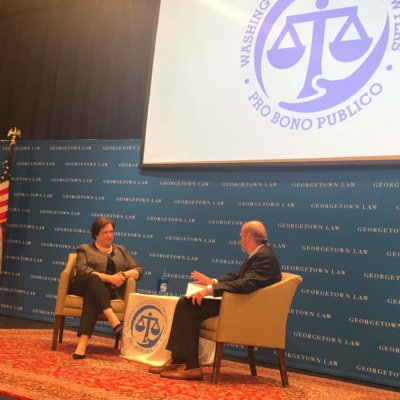
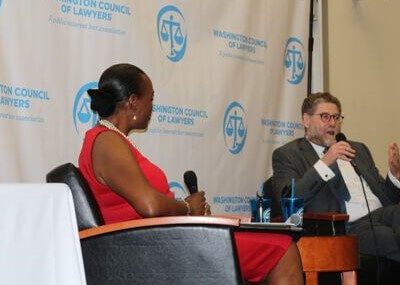
Washington Council of Lawyers was honored to host A Conversation with Justice Elena Kagan and Dean William Treanor of Georgetown University Law Center on Thursday, July 18, 2019. The conversation began with a discussion about the career of the late Justice John Paul Stevens, whose seat Justice Kagan filled after Justice Stevens retired. Justice Kagan praised Justice Stevens both in his role as a Supreme Court Justice and as an extraordinarily kind man and mentor. Speaking to an audience largely comprised of law school students, public-interest lawyers, and pro bono advocates, Justice Kagan commented on Justice Steven’s commitment to continued learning on the job and his fierce independence.
Check out photos from the 2019 Summer Forum.
Individuals living at or below the federal poverty level can encounter all manner of legal issues and are least likely to be able to afford legal representation. Lawyers practicing in this area must have a wide array of tools in their kit and an ability to meet a variety of challenges. The Poverty Law panel will explore the myriad ways lawyers help low-income residents including court matters with issues of housing, family, and consumer law; transactional matters such as public benefits; and policy work to ensure the defense and safeguarding of everyone’s rights regardless of position or power. #SumFo19
Pro bono work does not always involve litigation; in fact, among the most important contributions pro bono attorneys can make is to help individuals and organizations avoid the need to resort to judicial processes. Find out how at this panel. #SumFo19
The political climate has not cooled, so we're bringing back the panel that addresses the cutting-edge issues of government ethics, transparency and accountability. The panel will touch on a lot of interesting issues and practical tips. It is not one you will want to miss! #SumFo19
Introduced by Council member Elissa Silverman, the Wage Garnishment Fairness Amendment Act of 2018 protects from garnishment weekly wages up to 40 times the District’s minimum wage (currently $13.25 per hour, and rising in July to $14 per hour). The law’s effective date is April 11, 2019, and its protections will likely begin to apply on October 1, when the District’s new fiscal year begins.
“The most disrespected person in America is the black woman. The most unprotected person in America is the black woman. The most neglected person in America is the black woman.” Those are the words of Malcolm X, spoken in 1962. And it is the sentiment that motivated Alana Brown to found The Safe Sisters Circle. Founded in 2018, The Safe Sisters Circle is an organization that provides support and healing to black women survivors of domestic and sexual abuse.
Over the past few years, immigration has become one of the hottest pro bono and public-interest fields. At our 2019 Summer Forum, the Immigration and Human Rights panel will discuss the ways that immigrant-rights organizations are working to protect the rights of immigrants and promote access to justice both in the District and around the country. #SumFo19
Being an attorney in the District gives you a myriad of opportunities to work on civil rights and civil liberties issues. DC or federal work, litigation or policy, career or pro bono. Come to the Summer Pro Bono & Public-Interest Forum’s Civil Rights and Civil Liberties panel to learn how to defend these liberties. #SumFo19